

Within the busy professional world of today, it can seem a task to stay centered, relaxed, and balanced. Email, meetings, and deadlines can leave one frazzled. This is where Mindfulness at Work comes into play. Mindfulness is the ability to be present in the moment—aware of our surroundings, thoughts, and feelings without judgment. It allows professionals to deal with stress, make more effective decisions, and enhance overall health.
Moving towards mindfulness at work is not about adding one more task to your list—it’s about transforming how you actually do work. It allows you to respond thoughtfully rather than react impulsively. If your mind in the workplace is clear and concentrated, you get better, more innovative, and compassionate towards people. Whereas the world still has to have speed and multi-tasking, mindfulness gives you a much-needed break, and we can relearn balance in an accelerated world.
Understanding Mindfulness at Work

Mindfulness at Work is not just a wellness trend; it’s a proven method to improve focus and emotional intelligence. It involves consciously paying attention to the present moment, whether you’re working on a project, attending a meeting, or communicating with a colleague. This heightened awareness enhances clarity, reduces workplace stress, and builds stronger interpersonal relationships.
Organizations globally now incorporate mindfulness training programs to enhance employee satisfaction and retention. It has been proven through research that mindful employees are more resilient and better handle adversity. Thus, cultivating mindfulness is not only beneficial for individuals but also for organizational growth in general.
How to Practice Mindfulness at Work Effectively
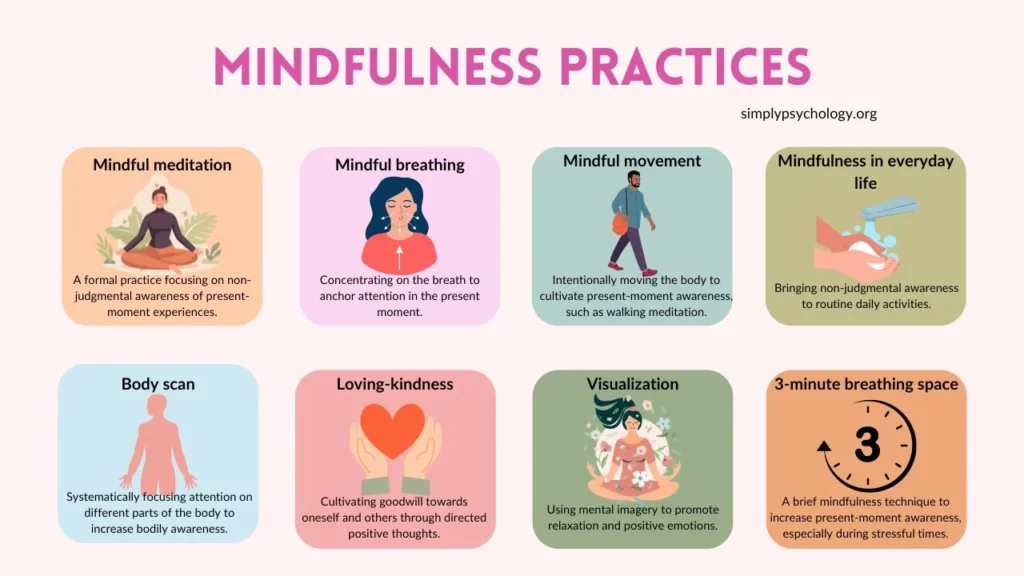
Mindfulness practice requires no special gear—only intent and practice. Below is how to become mindful on the job each day:
1. Start Your Day with Intention
Breathe deeply for a few breaths before you look at your phone or email. Set a positive intent for the day. Ask yourself what you intend to focus on and how you intend to show up.
2. Focus on One Task at a Time
Multitasking also lowers productivity and increases stress. Instead, give your complete attention to doing one thing before another. Once your workspace mind is fully concentrated, your work and creativity naturally improve.
3. Take Short Mindful Breaks
Step away from your desk for a few minutes, stretch, or take a short walk. Notice what is around you, notice your breath, and notice the feelings in your body. These short breaks reboot your energy.
4. Practice Mindful Listening
While communicating with others, listen in order to understand and not respond. Put away distractions, look at them while speaking, and give them your undivided attention. This develops compassion and improved working relationships.
5. Use Breathing Exercises During Stress
Whenever you are stressed, inhale slowly and deeply three times. This simple activity can calm your nervous system and redirect your mind.
How to Be Mindful at Work Every Day

Presence is an everyday habit. These are some ways of integrating it into your organizational culture:
Start meetings with a minute of silence: It calms the thoughts of the participants.
Use reminders: Put reminders such as “Breathe” or “Stay Present” around your work area.
End the day mindfully: Reflect on what went well and what you have learned.
As employees become more mindful in the workplace, they set in motion a ripple effect—reducing stress, increasing collaboration, and improving communication among teams.
Finding Balance in a Busy World through Mindfulness

Achieving balance in a busy world is less about balancing your time and more about balancing your energy. Mindfulness can make that happen. Presence allows you to manage challenges without being stressed out, rather than operating out of stress. Mindfulness helps separate what’s urgent from what’s truly important, leading to better priority-setting and less burnout.
Whether it is mindful breaks in meetings, gratitude, or brief meditation breaks, these little things create resilience and emotional balance. Over time, mindfulness converts your mind from chaos to peace.
Why Mindfulness at Work Matters for Organizations
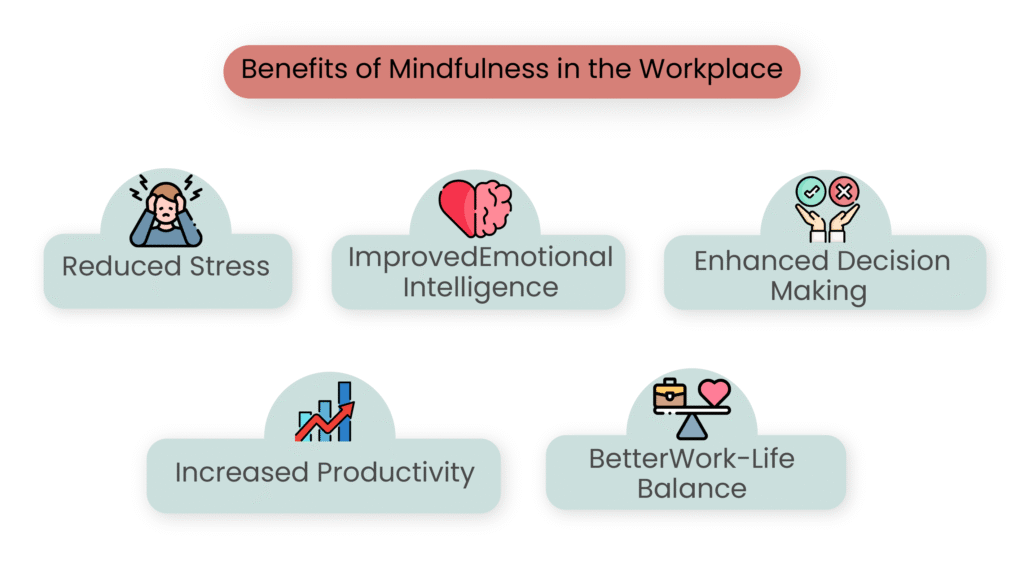
Organizations that cultivate mindfulness within the workplace notice increased employee engagement, better collaboration, and improved mental health. Mindful leaders inspire trust and lead with empathy. Companies that prioritize mindfulness also see decreased absenteeism and increased job satisfaction.
Companies like Google, Intel, and Salesforce have integrated mindfulness programs into their culture because they understand its impact on innovation, collaboration, and performance. A mindful workforce is a happy, innovative, and productive one.
Conclusion: Achieving Balance in a Busy World through Mindfulness

In conclusion, the cultivation of Mindfulness at Work is a great strategy for thriving in the demanding working world we are living in today. It allows us to manage stress, become more productive, and maintain emotional balance. By understanding how to be mindful in the workplace, we develop awareness and compassion that enhance both work and personal life.
When your working mind is clear and focused, challenges are less overwhelming and achievements more rewarding. Mindfulness bridges the gap between busyness and balance—leading us to navigate our workday with clarity, purpose, and peace. In essence, finding balance in a busy world begins with one mindful breath at a time.