

One of India’s most culturally vibrant and spiritually uplifting festivals is Basant Panchami. It symbolizes the arrival of spring and represents rebirth, optimism, and nature’s reawakening following winter. The festival honors Goddess Saraswati, the deity of knowledge, wisdom, music, and the arts, and typically takes place in the Hindu month of Magha (January–February). Devotees dress in yellow, pray, and ask for blessings for wisdom and wealth on this fortunate day.
Yellow is a key look of Basant Panchami, signifying vitality, hope, and the mustard fields that are in full bloom during this time of year. Saraswati Puja, which emphasizes the value of education and intellectual development, is organized by educational institutions, cultural groups, and households. On this day, children are frequently exposed to education through customs such as Vidyarambh Sanskar.
Basant Panchami has social and agricultural significance in addition to its religious significance. Farmers commemorate it as a seasonal shift that marks the start of harvest preparations. In many areas, the celebration is made more joyful by kite flying, cultural events, and community get-togethers. All things considered, Basant Panchami is a festival of optimism, development, and enlightenment since it skillfully combines devotion, tradition, and nature.
Why Basant Panchami Is Celebrated In Hindu Tradition
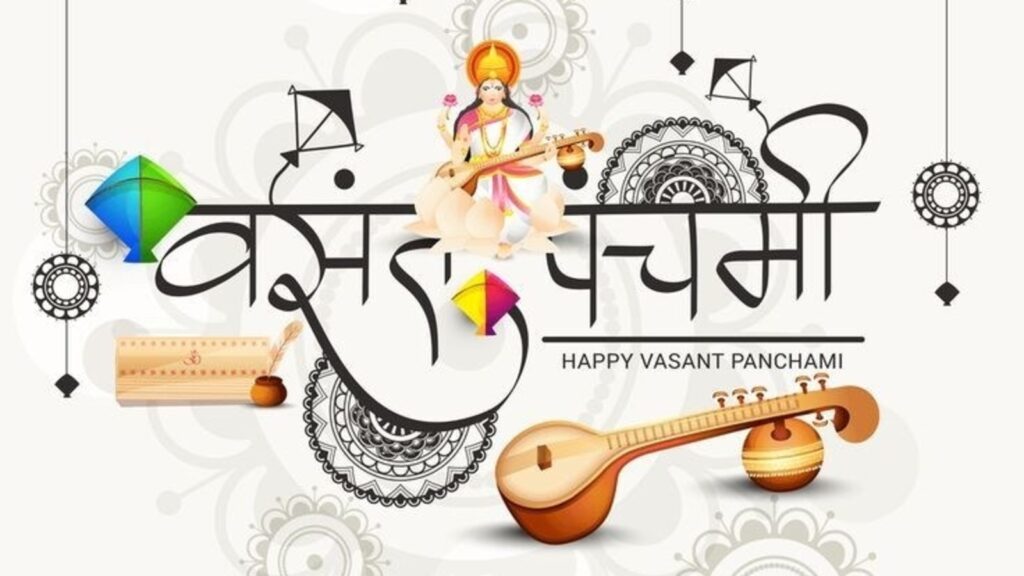
Examining Basant Panchami’s intricate relationship to Hinduism and seasonal change is necessary to comprehend why it is observed. Hindu mythology states that on this day, Goddess Saraswati was born, bringing clarity, light, and wisdom to the world. She was created by Lord Brahma to impart knowledge and order to a previously chaotic and quiet existence.
Additionally, the celebration commemorates the change from the difficult winter to the delightful spring, a time of development, fertility, and creativity. In a spiritual sense, it represents the acceptance of wisdom and the eradication of ignorance. Goddess Saraswati is worshipped by educators, researchers, artists, and students who seek her intellectual and artistic gifts.
In many areas, people start auspicious endeavors like launching new businesses, educational programs, or artistic endeavors. The day is thought to be very conducive to learning and creativity. As a result, Basant Panchami is observed as a religious holiday as well as a reminder of the value of education, knowledge, and fresh starts.
Basant Panchami History From Ancient Hindu Scriptures
Ancient Hindu literature and customs are the source of the Basant Panchami’s history. Scriptures like the Puranas and Rigveda mention this celebration, praising spring as a time of rebirth and vitality. In the past, the celebration was connected to the worship of nature and agricultural cycles.
Basant Panchami was also observed as a royal holiday in the past. To celebrate Saraswati, kings and academics arranged musical concerts, poetry recitals, and cultural gatherings, strengthening the link between education, wisdom, and governance. The mustard crops that blossom around this time of year are thought to be the source of the custom of wearing yellow.
Basant Panchami changed over the ages to incorporate local traditions while keeping its fundamental characteristics. Its historical path, from academic celebrations to temple rituals, demonstrates India’s profound regard for education, the arts, and seasonal balance.
Basant Panchami Significance In Education And Culture

The Basant Panchami’s importance stems from its close ties to cultural advancement and education. One of the best times to start learning is on this day. Saraswati Puja, which emphasizes creativity and academic discipline, is performed in schools, colleges, and music academies.
On this day, children typically write their first letters as part of the Vidyarambh ceremony. In search of divine inspiration, artists present their books and instruments to the goddess. The celebration promotes respect for knowledge and lifelong learning.
In terms of culture, Basant Panchami promotes harmony with the natural world. It encourages people to develop intellectually and spiritually in tandem with the changing of the seasons by celebrating creativity, optimism, and mental clarity.
Basant Panchami Importance In Spiritual And Seasonal Context
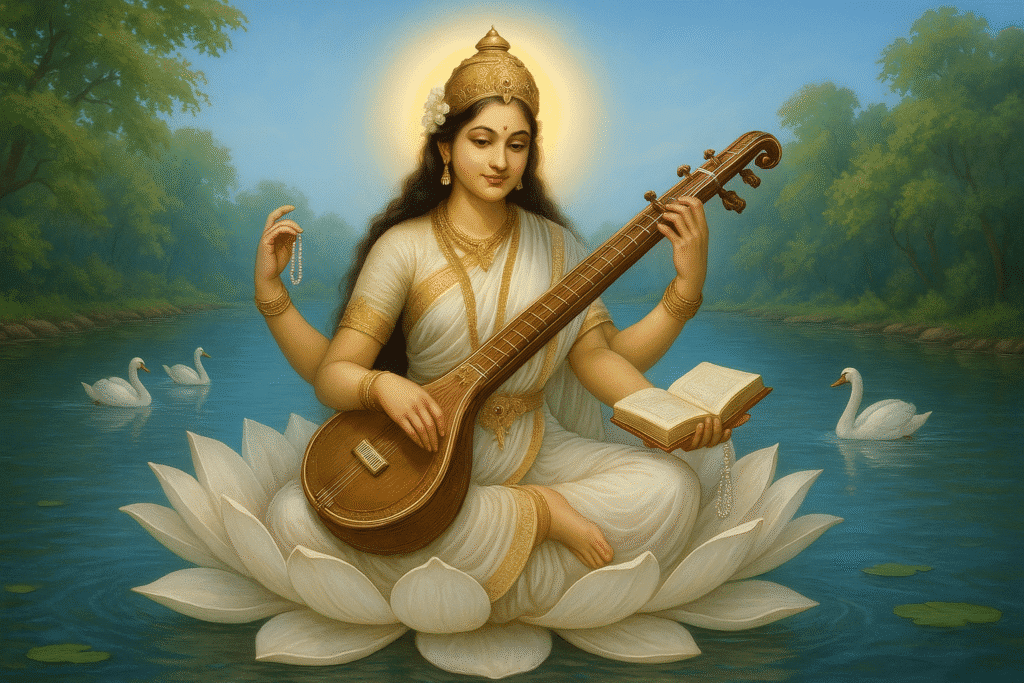
Beyond religion, Basant Panchami is important for seasonal and spiritual well-being. In terms of spirituality, the celebration stands for enlightenment, inner awakening, and mental clarity. Worshiping Saraswati inspires people to choose discipline over chaos and wisdom over ignorance.
Basant Panchami is a seasonal celebration of spring, a period of rebirth, fertility, and good vibes. Communities welcome it as a celebration of life and development, while farmers view it as a time of hope for crops. The festival’s focus on yellow represents warmth, prosperity, and life.
Basant Panchami reminds society of the balance between knowledge, the environment, and human advancement by combining spirituality, education, and the natural world.
Conclusion On Basant Panchami History Meaning And Importance
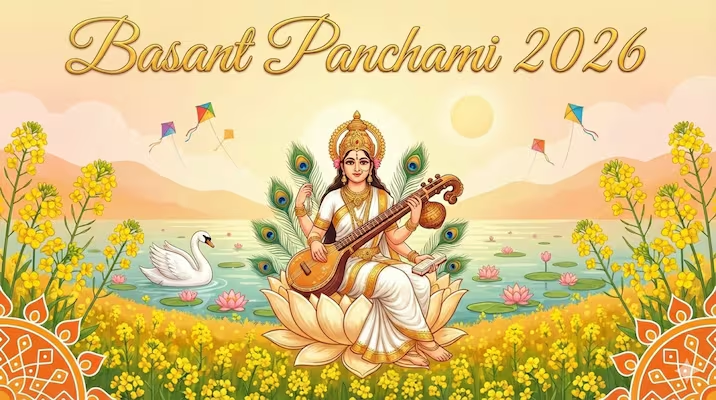
Basant Panchami is a celebration of harmony, wisdom, and rebirth rather than merely a festival. It emphasizes the value of knowledge, creativity, and seasonal transformation and has its roots in Hindu tradition. The celebration has deep spiritual and cultural significance, ranging from celebrating Goddess Saraswati to welcoming the bright energy of spring.
India’s longstanding reverence for education and the arts is reflected in the history of Basant Panchami, and its relevance today continues to motivate researchers, artists, and students. The festival reminds us that awareness and wisdom are the first steps toward real growth. Its seasonal significance serves as a reminder to maintain our connection to the natural world and welcome change with hope.
Basant Panchami is a subtle reminder to stop, think, and invest in intellectual and spiritual growth in the fast-paced world of today. Spreading light, optimism, and knowledge is the core of Basant Panchami, whether it is observed through prayers, education, or cultural events. It is still a timeless celebration that leads future generations to enlightenment and significant development.