

While the launch of a website is an exciting process, making it visible in Google is a different story. It will not be enough to create a pretty website; it needs to get indexed by search engines, be crawled correctly, have its content indexed, and show all necessary signals to prove its value and trustworthiness.
That is why having a checklist for SEO of a new website is essential at the very beginning of your work. You do not have to fix traffic issues later; instead, you can incorporate SEO into the process of launching your website.
Below you will find 25 useful steps to conduct SEO of your new website for 2026, from researching keywords and setting up technical aspects to writing content, using internal links, optimizing your website for mobile devices, and building backlinks.
SEO Checklist for New Website: Define Your SEO Goals
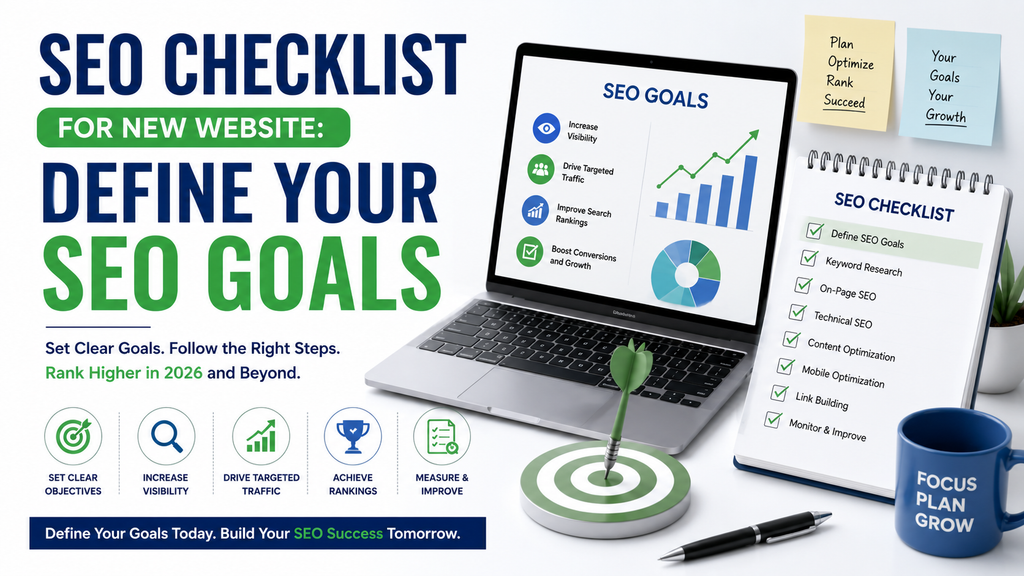
Before altering titles and publishing blogs, be sure about what you want from SEO.
Some of your SEO objectives might be:
Gaining more organic traffic
Gaining more leads
Making sales of products
Brand building
Informational keyword ranking
Topical authority building
Setting clear SEO objectives will help you in making an SEO strategy for your upcoming website.
SEO for New Website: Understand Your Target Audience

Good SEO begins with knowledge of people rather than search engines.
Learn who your target market is, what their problems are, what questions they might have, what interests them, and how they behave while making purchases.
Knowledge of your target market will help you write good content.
SEO Steps for New Website: Perform Keyword Research
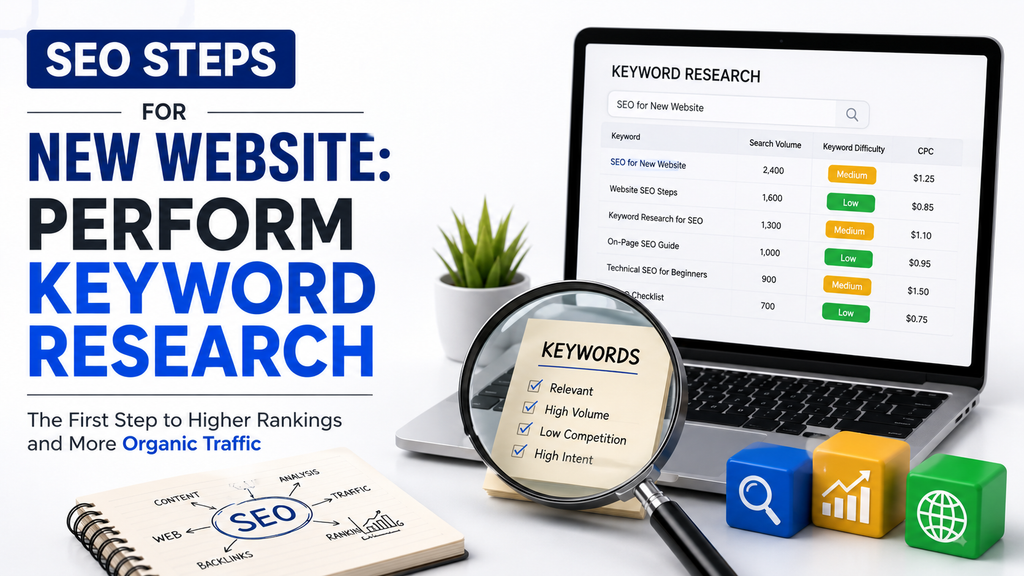
The keyword research process allows you to find out what words and phrases your future visitors would use.
This includes:
Primary keywords
Long-tail keywords
Questions-based searches
Geo-modified keywords
Commercial keywords
Informative keywords
Don’t limit yourself to high-volume keywords only. Sometimes low-competition keywords may be much easier to target..
New Website SEO Checklist: Map Keywords to Pages
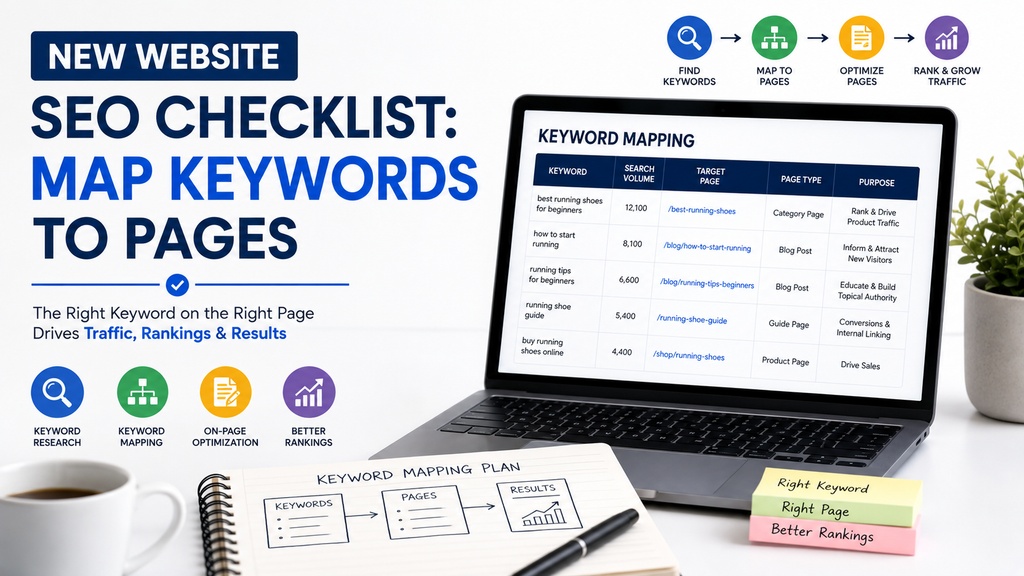
Do not use the same primary keyword on several pages.
Create an easy to understand keyword map:
| Page | Primary Keyword | Intent |
|---|---|---|
| Home page | Term describing the business/serv. | Commercial |
| Service page | Specific service | Commercial |
| Blog | Informative keyword | Informational |
| Product page | Keyword for product | Transactional |
| About page | Keywords associated with brand | Navigational |
Google SEO Checklist: Set Up Google Search Console
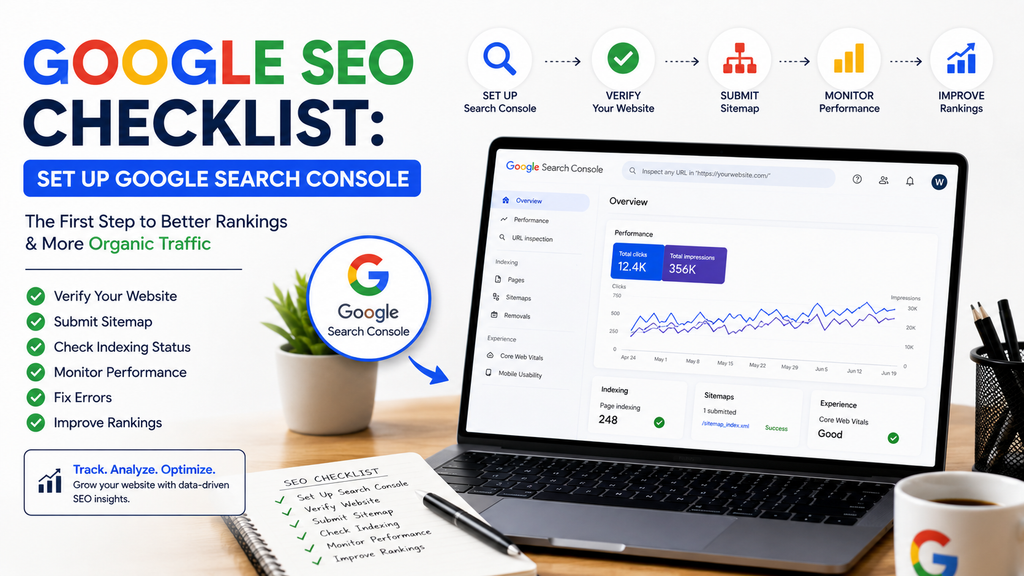
The Google Search Console tool is one of the most helpful free tools available for a newly launched site.
Link your domain and utilize the tool to track:
Indexing statistics
Search queries
Click-through rate
Pages ranking
Mobile usability
Core Web Vitals
Issues with sitemap
Upload your site’s XML sitemap after ensuring that key pages can be crawled.
Website SEO Checklist: Create and Submit an XML Sitemap
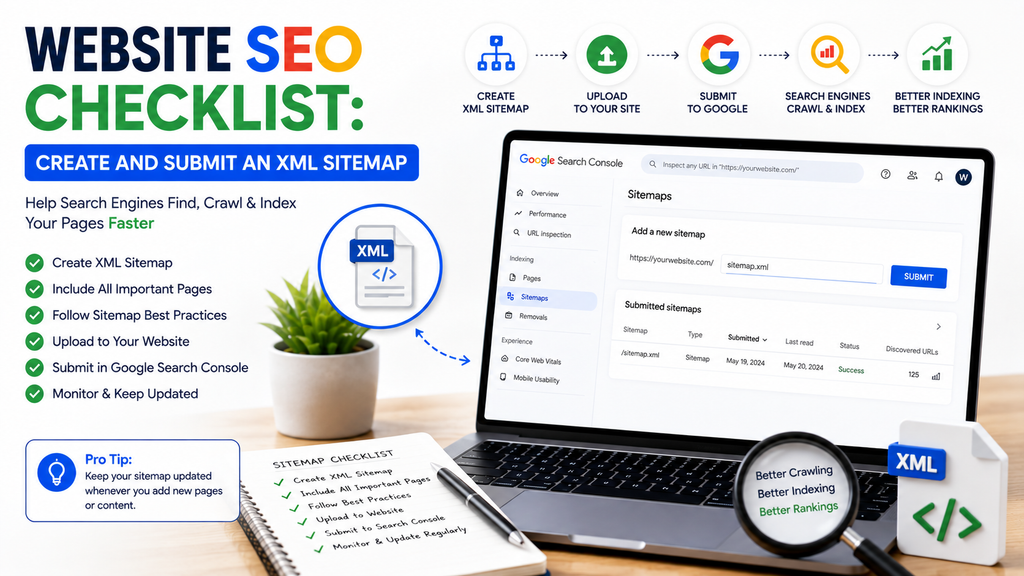
The XML Sitemap provides information to the search engine on the important URLs present on your site.
Your sitemap should be:
A Canonical URL
Do not include unnecessary pages
Have the correct HTTPS URLs
Be updated with new content
Do not include any broken/redirected URLs
Submit your sitemap using Google Search Console.
SEO for New Websites: Check Your Robots.txt File

Robots.txt tells search engine crawlers what content they can and cannot crawl.
A frequent error is blocking crucial content by accident.
Verify your robots.txt file isn’t preventing Google from crawling:
Home page
Blogs
Product pages
CSS and JavaScript files where necessary
Always test your technical configurations prior to launch.
SEO Checklist for New Website: Make Sure Important Pages Are Indexed
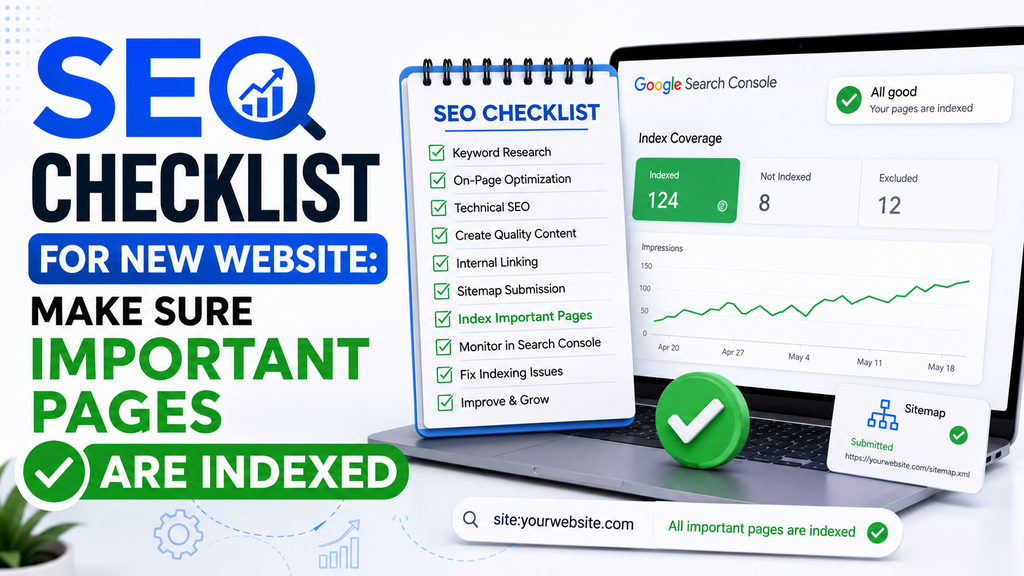
Crawling is different from indexing.
Google has to discover the page before crawling and possibly indexing it.
Important URLs need to be checked for accidental:
Noindex tags
Canonical mistakes
Redirects
404 errors
Blocked resources
Your homepage, key services page, and valuable content needs to be crawlable by search engines.
SEO Strategy for New Website: Build a Clear Site Structure
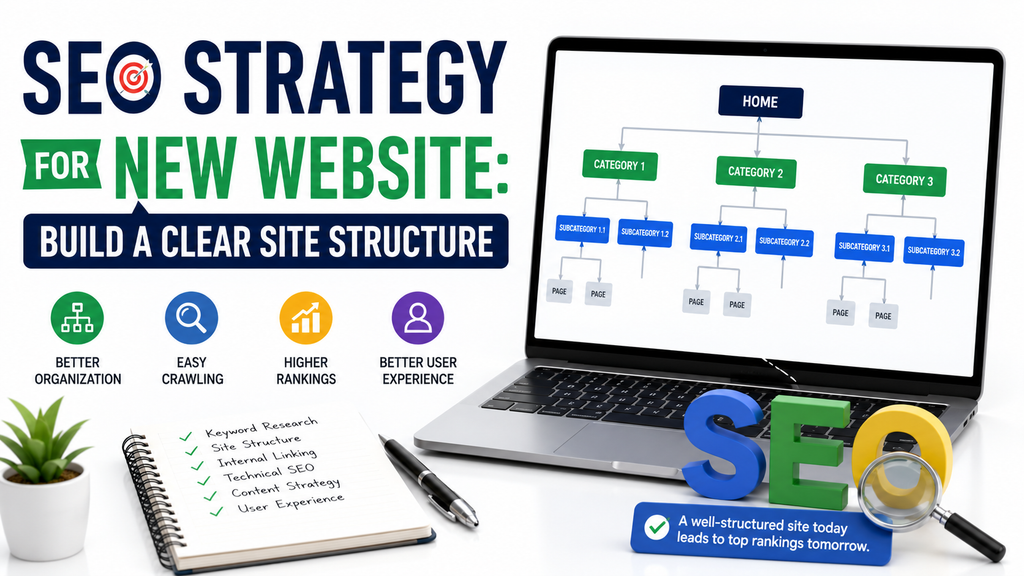
A website needs to be easily readable by the visitors and even by the search engine.
Use an organized structure where you have meaningful categorization and ensure that all the relevant pages are just a few clicks away from your home page.
Such as,
Home > Services > SEO Services > Local SEO
SEO for New Website: Optimize Title Tags
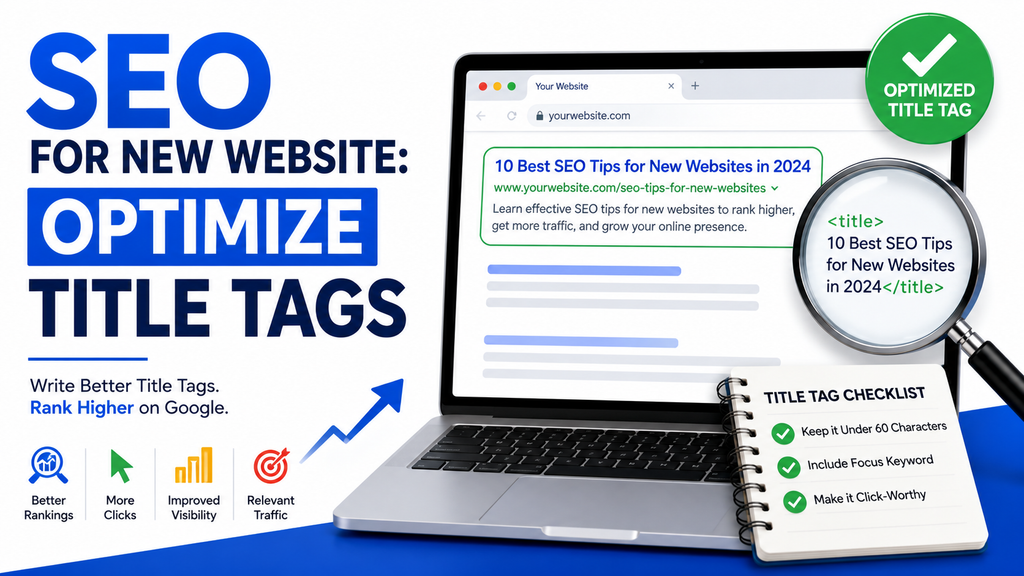
The following is a must-have for all critical pages.
Make sure that the title tag matches the purpose and contents of the page. Don’t include the key phrase unnaturally in your title tag.
Example:
SEO checklist for new website: 25 steps for 2026
is much better than an overstuffed title tag.
New Website SEO Checklist: Write Useful Meta Descriptions
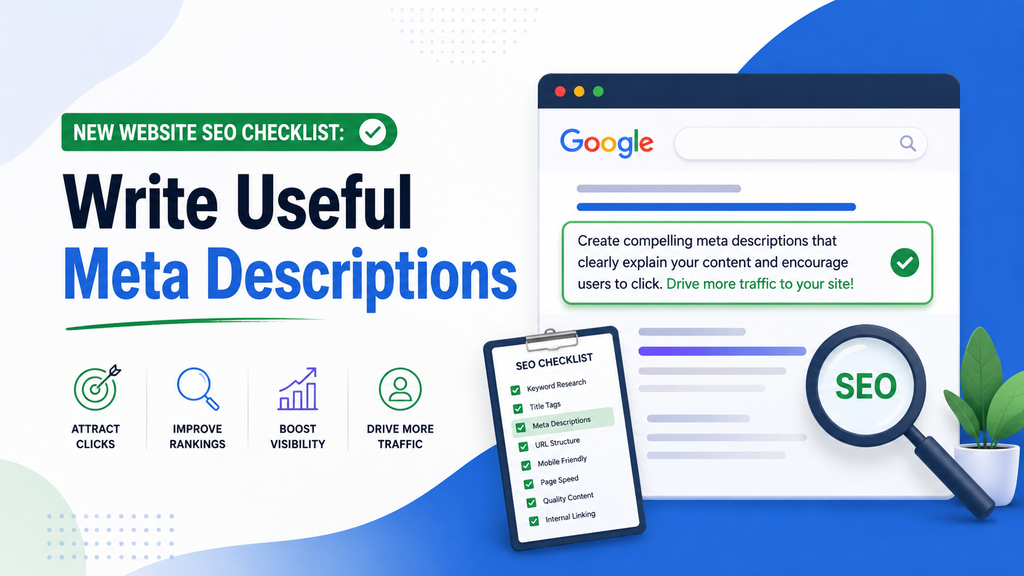
However, meta descriptions do not impact search engine rankings, although they may have an effect on the odds of people clicking your listing.
Write descriptions that tell people what they can expect to see on the page.
Topic must be covered naturally and give reasons for people to click your listing.
Google SEO Checklist: Use One Clear H1 Heading
All your main pages must have unique headers.
The header H1 will help you communicate with both your visitors and search engines about your page content. Use headers H2 and H3 to define subheaders in different parts of your page.
No extra keywords must be added to the headers just to increase their keyword density.
SEO Steps for New Website: Create Helpful Original Content
Content is still an important element in your SEO; however, writing dozens of irrelevant content pieces will not help you in any way.
Create content that:
Answered real questions
Provided useful information
Added something fresh to the conversation
Was easy to understand
Satisfied the intent behind the search
Demonstrated your expertise and experience
The purpose of Google algorithms is to find useful content; therefore, it is not necessary to write just for search engines.
SEO for New Websites: Build Topical Authority
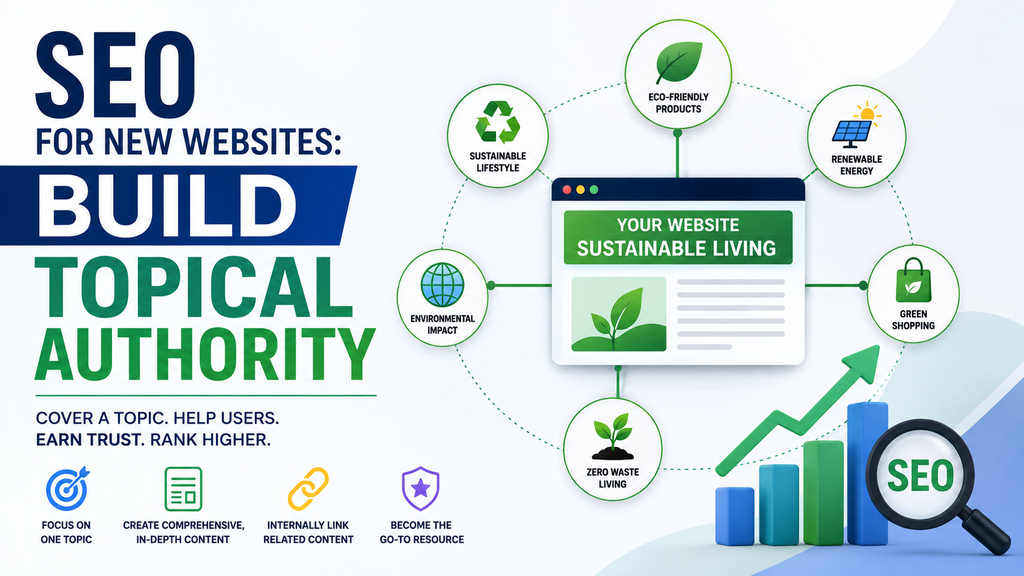
An emerging website should develop expertise on its main topic gradually.
Rather than writing on different topics, build relevant content clusters.
For instance, an SEO website can include topics such as:
Keyword research
Technical SEO
On-page SEO
Link building
Local SEO
AI and search
SEO analytics
Link relevant pages using internal links.
Website SEO Checklist: Strengthen Internal Linking
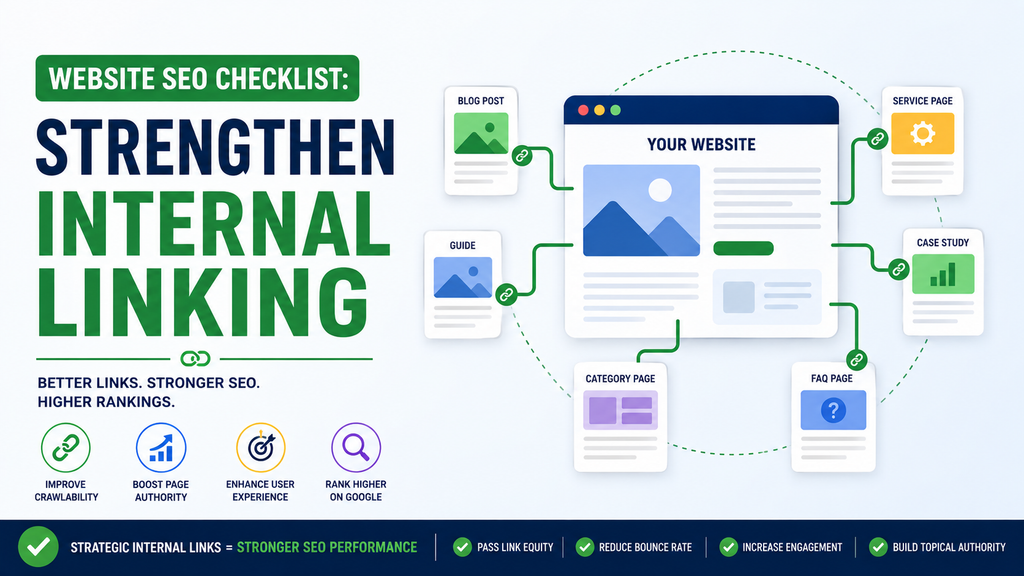
The use of internal links helps both visitors find additional relevant information and search engines establish connections between webpages.
From:
Blog posts to service pages
Supplemental articles to pillar pages
Guides that relate to each other
High authority pages to new pages
Do not use “click here” multiple times for anchor text; use descriptive link text instead.
SEO Checklist for New Website: Improve Mobile SEO
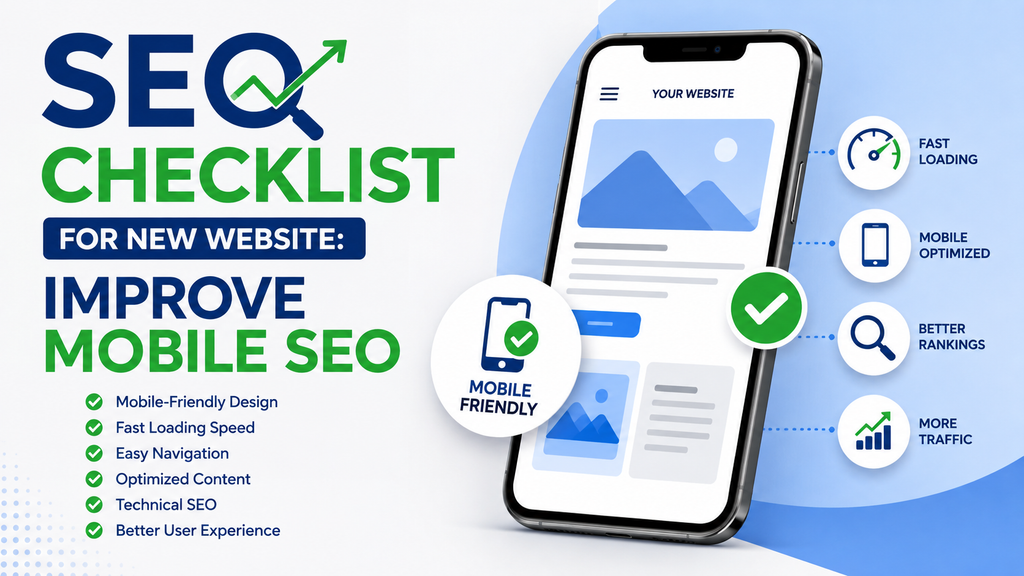
The Google search engine has adopted the mobile-first indexing approach, which means that your website should be mobile-friendly.
Test:
Responsiveness
Font size
Buttons & Links
Navigation
Forms
Images
Pop-ups
Layout
Make sure to test important pages on various screens before going live.
SEO Strategy for New Website: Improve Page Speed
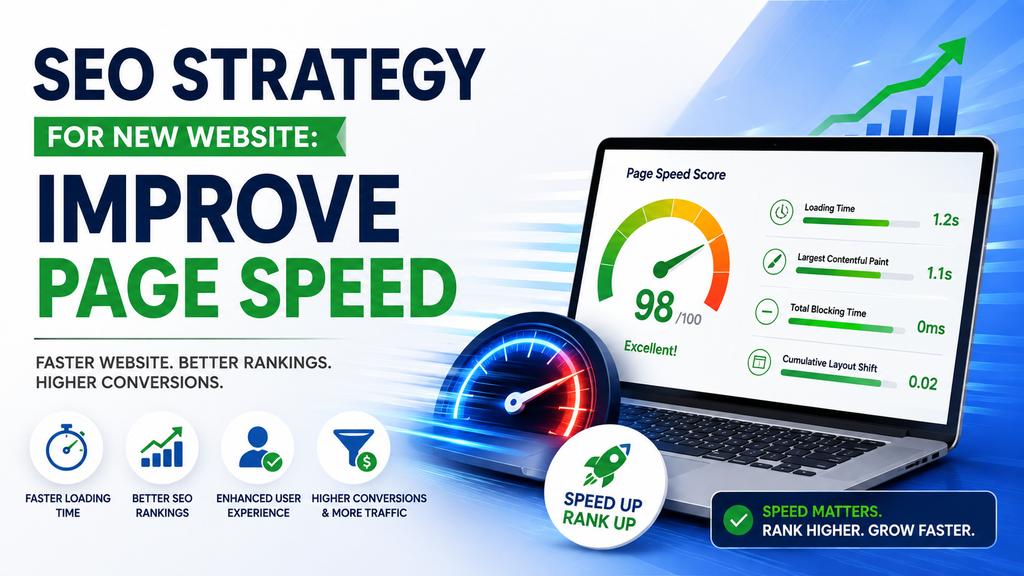
Slow-loading websites can cause a bad user experience.
Ensure your website is not heavy by compressing images, stripping off unnecessary code, browser caching, and choosing an excellent hosting provider.
Additionally, check Google’s Core Web Vitals, which include measures related to page speed.
New Website SEO Checklist: Fix Technical SEO Errors
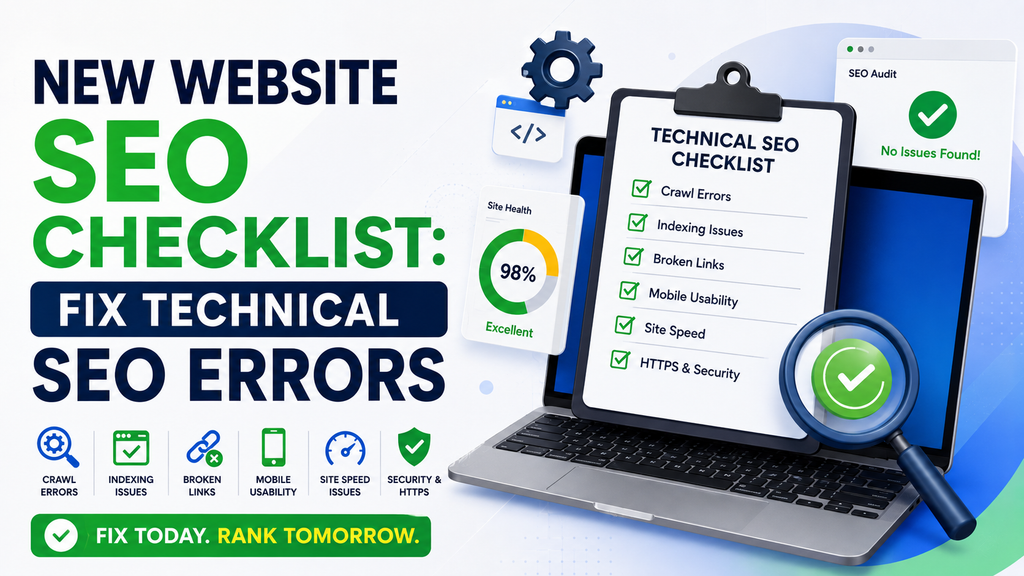
Conduct technical SEO audits before and after website launch.
Check for the following problems:
Broken links
Duplicate pages
Redirects
Missing canonical tag
Incorrect HTTP status code
HTTPS
Orphan pages
Metadata duplication
Solving these problems at an early stage will help you save plenty of time.
SEO for New Website: Optimize Images
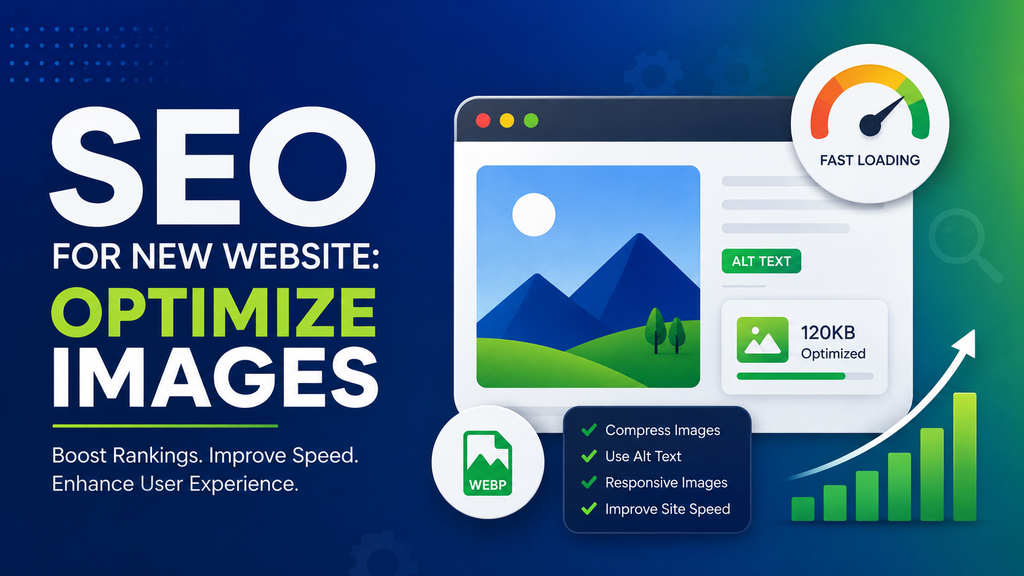
These images need to enhance user experience without making your web pages slow.
Make use of proper image format, compress bulky files, and add alt text which is descriptive and useful.
Alt text should not be used to add keywords.
Google SEO Checklist: Create Essential Website Pages
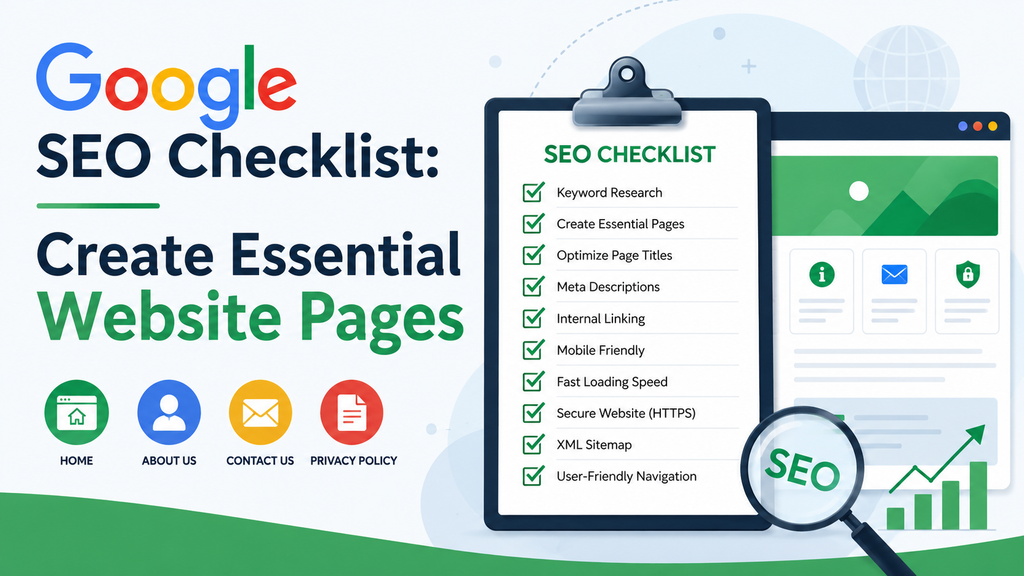
Your new site should appear whole and legitimate.
Based on your specific business needs, you may want to include the following pages:
About Us
Contact Us
Services
Privacy Policy
Terms and Conditions
Editorial Policy
Author information
These additional pages will also add to your legitimacy and demonstrate who runs your website.
SEO Checklist for New Website: Build Trust and a Personal Brand

There is a higher likelihood of gaining trust when there are clear indications of the owners of the websites.
Consider adding biographies, professional experience, the organization’s information, contact information, and credentials where necessary.
In order to Build a Personal Brand, one needs to link the website content to your expertise and experience.
SEO for New Websites: Earn Quality Backlinks
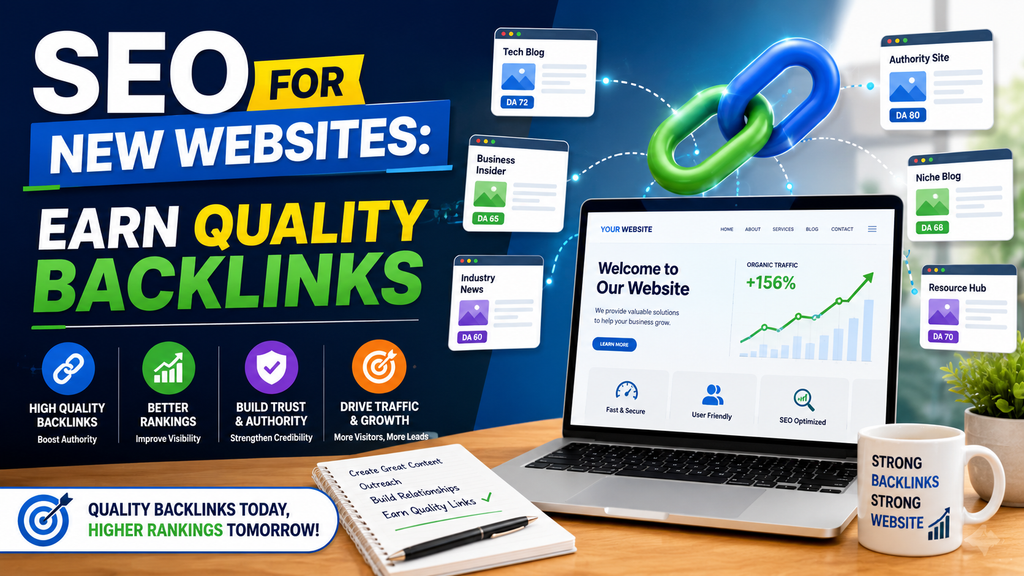
Backlinks will assist search engines to find your website, and the backlinks could also increase your authority when they are from reputable sources.
Consider building links through:
Research
Valuable resource
Digital PR
Expertise
Relationships within the industry
High-quality content
Do not buy lots of low-quality backlinks and use manipulative linking practices.
New Website SEO Strategy: Monitor Performance
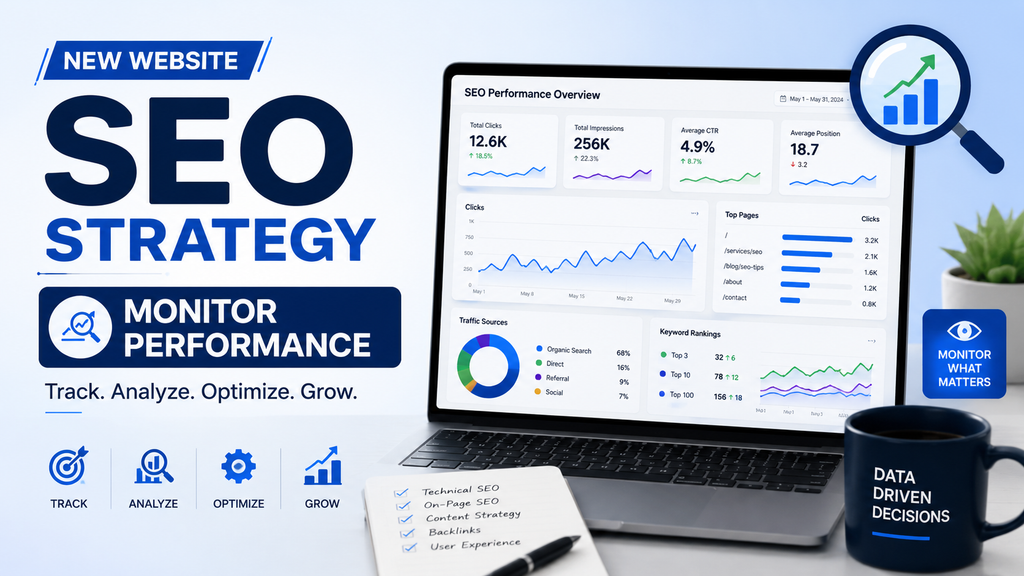
It’s not a one-off task when it comes to SEO.
Use Google Search Console and analytical tools to check the following:
Organic traffic
Search impressions
CTR
Ranking performance
Indexed pages
Best performing pages
Search queries
Look at the data you have received and make changes based on search queries.
Website Launch SEO Checklist: Test Everything Before Going Live
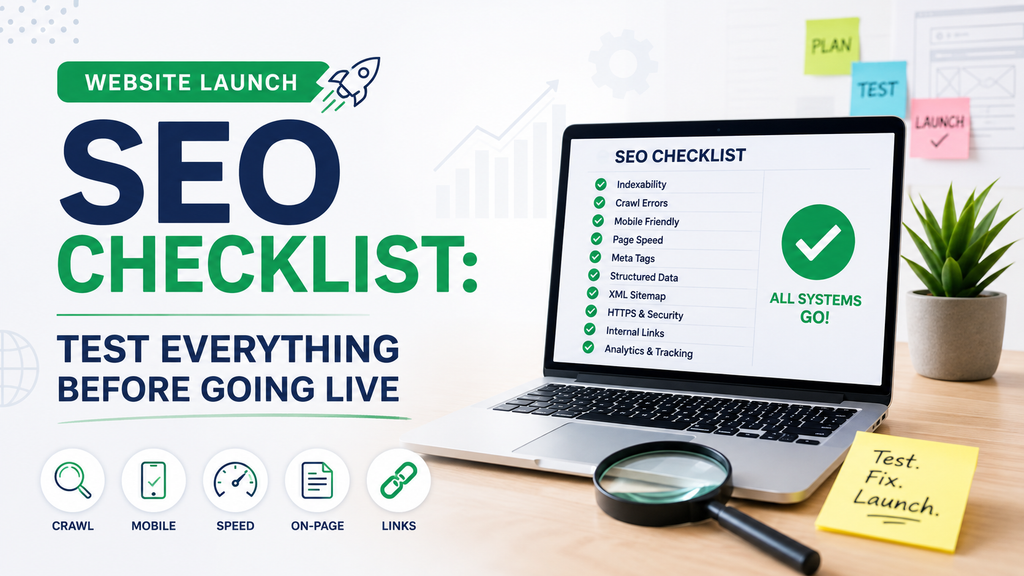
Prior to launch, conduct a website launch SEO checklist.
Ensure that:
HTTPS is working
Important pages are loading
Internal links are functional
Forms work
Sitemap exists
Robots.txt file is correct
No important page is marked noindex
Redirects are functioning
Mobile pages look good
Search Console and Analytics are linked
A launch-day SEO check can prevent avoidable technical problems.
SEO Checklist for New Website 2026: Keep Improving After Launch
SEO does not end once your website is launched.
Google’s search landscape constantly changes, and with AI-assisted search and user behavior, it becomes essential to concentrate on the content that works for you, good technical foundation, proper website structure, and expertise.
Moreover, our comprehensive SEO Guide 2026 also implies considering the future direction of search instead of using traditional ranking techniques. The Future of SEO with Artificial Intelligence is going to make reliable and structured content even more valuable.
Finally, it is also useful to know about common technical mistakes mentioned in Common WordPress Mistakes, especially if your new website uses WordPress. Furthermore, getting acquainted with SEO Strategies for New Websites and Best WordPress Plugins in 2026 will allow you to streamline the process without any unnecessary plugins.
SEO Checklist for New Website: Final Thoughts
It may be more difficult for a website to get organic visibility when launched without any SEO preparation. Fortunately, most of the SEO-related processes are preparable.
Use this seo checklist for new websites to lay a solid foundation: conduct audience research, select suitable keywords, increase technical SEO, produce helpful content, increase internal links, improve mobile compatibility, track Core Web Vitals and earn legitimate authority.
The most crucial thing is to understand that SEO is not a quick way to rankings. Think about what makes your website helpful for people looking for answers. If you combine technical SEO and helpful content, your website will have greater chances of getting sustainable organic traffic in 2026.
FAQs About SEO for New Websites
How long does SEO take for a new website?
There is no set timeline here. It may take weeks or even months until a new site starts getting significant visibility in the search engines depending on the level of competition, quality of content, authority, technical aspects of the site, and the nature of search queries.
What should I do first for new website SEO?
Technical SEO is important, as well as keyword research, search intent analysis, website architecture, Google Search Console setup, sitemap generation, and other aspects of on-page SEO.
Does a new website need backlinks?
Backlinks might help, but they should not be the priority. At least for a new site, it is advisable to first focus on producing quality content, building good internal links and establishing good technical SEO, before prioritizing building links.
How many keywords should a new website target?
There is no exact number that would be ideal here. First of all, choose keywords related to the products/services offered by your company. Use related keywords naturally and avoid creating a page just to cover some additional keywords.
Is SEO still important in 2026 with AI search?
Yes. AI will certainly change how people search for information on the Internet, but a website will still require good content, good technical accessibility, information and credibility. Thus, a good new website SEO checklist will consist of both classical SEO aspects and those related to AI searches.